
Before spending time on adverts, posts or a new website, decide what you need to achieve. Who are you trying to reach, and what would make them choose your business?
The marketing process turns those answers into a plan. It connects your offer, your campaign and the way your team handles the response.
What Is the Marketing Process?
The marketing process involves understanding customer needs, shaping an offer and reaching the right people. It also covers sales support, customer care and learning from results.
Pricing and delivery belong in the plan too. Customers need to understand the cost, know how to buy and trust that you can deliver.
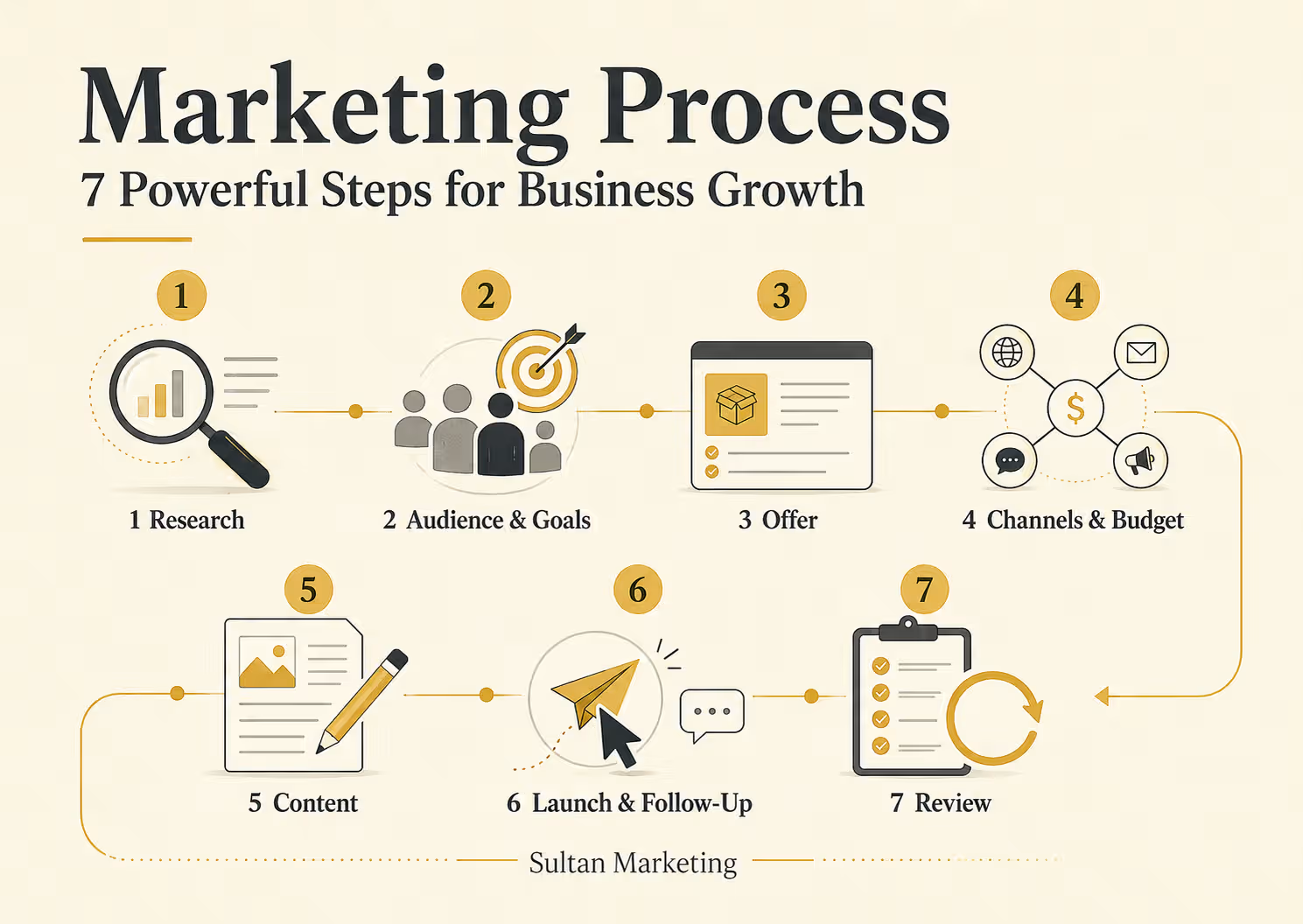
Feedback helps you adjust earlier decisions, so these seven steps work as a cycle.
The Marketing Process at a Glance
| Step | Key question | What to put in place |
|---|---|---|
| 1. Research | What do customers need? | Needs backed by facts |
| 2. Set goals | Who will we serve, and what should improve? | A chosen audience and clear goals |
| 3. Shape the offer | Why should people choose us? | Benefits, prices and proof |
| 4. Plan spending | Where should we focus? | Channels, budget and team roles |
| 5. Create content | What helps people decide? | Useful pages, posts and working forms |
| 6. Launch and follow up | How will we support people? | A schedule and response team |
| 7. Review results | What should we change? | Findings to guide improvements |
1. Research Your Market and Your Customers
Research gives the marketing process its starting point: the questions people ask before buying. Past enquiries and customer feedback show what helped people decide and what they struggled to understand.
Search terms that bring website visits add another view. Compare them with questions your team hears to find topics your content needs to explain.
Other businesses serving the same customers are worth studying too. Look at their offers, price information and evidence of completed work.
To decide what deserves attention first, ask:
- How often does this come up? Look for patterns in enquiries and feedback.
- How much does it matter? Check its effect on buying choices or the service you provide.
- What would it take to fix? Consider the time, cost and skills needed.
A rare problem can still be serious. Keep evidence beside each finding to explain why it deserves attention.
2. Choose Your Audience and Set Business Goals
Decide Who You Can Serve Well
Choose an audience your business can serve well. Location matters, but so do the need, the buying timescale and the person making the decision.
Consider demand, the cost of serving that group and your team’s ability to take on the work. A good fit helps you choose your offer and where to promote it.
Set Goals You Can Check
A goal gives the marketing process a clear purpose. Before setting a target, record where you stand now.
Then add a deadline and name someone to track progress. Everyone should know which result matters most and how you will measure it.
Enquiry quality matters alongside volume. Qualified enquiries come from people whose needs fit your offer and who could become customers.
Agree what makes an enquiry suitable, including the customer’s needs and buying timescale. A shared definition helps the team count enquiries in the same way.
3. Explain Your Offer and Its Value
Your research should now help you explain the offer. What need does your product, service or project meet, and what does the customer receive?
The marketing process connects those needs with a promise your business can keep.
Customers need to know:
- Scope: What is included, and what is left out?
- Price: What does it cost, or how do you prepare a quote?
- Delivery: What are the main stages, who handles them and how long do they take?
- Proof: What completed work, records or real feedback supports the offer?
Ask the delivery team to check that your promises match what the business can provide.
The same offer should be recognisable wherever people encounter it. Consistent digital branding carries your message and visual style across the website and campaign materials.
4. Choose Your Channels and Plan Your Budget
Go Where Your Audience Looks
Search, social media and email are channels: ways to reach people. Their role depends on how customers look for information.
Website articles can answer detailed questions, while social posts show your work. Email keeps customers informed through agreed updates.
Your existing visits and enquiries give you a starting point for choosing channels. Consider the time and skills needed to keep each channel useful.
Give new channels a purpose and a limited budget. Enquiry quality and sales results should guide further spending.
Cover the Full Cost
Your budget needs to cover the full marketing process, including research, content, website work and time spent answering enquiries.
Fund essential tasks first, then decide which channels best support your goal.
Keep setup costs separate from ongoing spending, and include both staff time and supplier fees. Each budget item needs a spending limit, someone responsible for it and a review date.
5. Create Content That Helps People Decide
A service page should explain what you do and how the work runs. Project pages need features and progress updates. Supporting articles can answer longer questions, with completed work providing evidence of your experience.
Writers and designers need a brief before they begin. It should identify the audience, purpose, main message and supporting facts. A deadline and a named reviewer help keep the work moving.
Before publishing, check that:
- The team has checked claims, prices and details.
- Adverts and the pages they link to describe the same offer.
- Pages and forms work on phones.
- You can track the action you want people to take.
- The team answering enquiries understands the offer.
Forms need enough detail to assess enquiries and reply. Explain what happens next. Send a test enquiry to check it reaches the right person.
6. Launch Your Campaign and Follow Up
Once a campaign goes live, your team needs to be ready for the response. Follow-up is part of the marketing process too.
Make Sure the Team Is Ready
Before launch, agree the dates, spending limits and person responsible for each channel. When the content is live, check how it displays and whether tracking works.
A shared enquiry record gives everyone the same view of outstanding work. Include each person’s needs, who will reply and the next action. Record why an enquiry closes or pauses.
Ask new customers how they found you. Their answers add context to your tracking records.
Learn From Customer Feedback
Customer feedback needs to reach people who can act on it. Ask what worked and where the service fell short. After making changes, follow up to find out whether they helped.
Further contact should have a purpose, such as a service update, agreed review or known customer need.
Track repeat work and referrals separately. Review them over a period that suits how often customers need your service.
7. Measure Results and Improve Your Plan
To improve the marketing process, you need to see which work brings suitable enquiries and sales, and what it costs.
Know What Each Measure Means
For new customer measures, count each person or business once, even if they send several enquiries. Allow an agreed time for follow-up before counting how many bought.
| Measure | How to work it out |
|---|---|
| Cost per qualified enquiry | Campaign cost ÷ qualified enquiries |
| Qualified enquiry conversion rate | New customers from that enquiry group ÷ qualified enquiries in the group × 100 |
| Campaign cost per new customer | Campaign cost ÷ new customers linked to that campaign |
| Returning customers | Count existing customers who buy again during the period |
| Repeat revenue | Add up income from those customers’ repeat purchases |
The conversion rate shows what share of suitable enquiries became sales. Use the same enquiry group when counting both enquiries and new customers.
State the dates and costs covered, and how you link sales to a campaign. Use the same rules and allow the same time for follow-up when comparing results.
Where a calculation requires dividing by zero, mark the result as unavailable. Report the actual spending and customer totals alongside it.
Sales income is only part of the picture. Delivery costs, marketing costs and other business expenses determine how much profit remains.

Use Results to Choose Your Next Action
Enquiry records and customer feedback help explain the numbers. Look for the reasons behind unsuitable enquiries, lost sales and service complaints before choosing what to change.
Test a defined change over an agreed period, keeping other conditions as steady as possible. Give customers enough time to respond. Record the finding and the decision it supports.
Sultan Marketing’s Role in the Marketing Process
Sultan Marketing is the marketing subsidiary of Sultan Group of Companies. It supports the group’s companies, ventures and projects.
Its work covers branding, search engine optimisation (SEO), websites, social media, paid campaigns, content and video production.
Sultan Marketing’s approach brings planning and creative work into the same marketing process. Research informs the brief, the team develops the campaign, and results guide further work.
This gives the group a shared marketing direction while keeping each company’s expertise and each project’s offer distinct.
Marketing Process FAQs
How Does a Marketing Process Differ From a Strategy?
A strategy sets the direction: who to serve, what to offer and how to compete. The process covers how you develop that strategy, put it into practice and improve it.
Can a Small Business Use These Seven Steps?
Yes. A small business can keep the marketing process focused on one audience, a few channels and simple records. Expand when demand grows and your team can handle the work.
How Often Should You Review Your Marketing Process?
Check active spending and campaign delivery regularly. Plan fuller reviews around how long customers take to buy. Review sooner when your offer changes, problems recur or results shift.
Put the Marketing Process to Work
Choose your next business goal, agree who will do the work and set a date to review it. Use these seven steps to make those decisions clearer as you go.
Share the results with your sales and delivery teams. Discuss what helped customers decide and where they needed more support. Use those findings to improve the next campaign and strengthen the service behind it.


1 Comment
[…] one clearly defined part where practical, then allow time to assess the response. The guide to the marketing process covers the wider work of campaign delivery and […]